

Imagine a bustling industrial yard where semi-trucks, forklifts, and delivery vans crisscross the pavement all day—every day. The ground beneath them isn’t just an ordinary surface; it’s the platform that keeps your operations efficient and safe. Selecting the best asphalt for industrial and commercial use is far more than a basic maintenance decision—it’s a critical investment in the future of your business.
Introduction to Asphalt for Industrial and Commercial Facilities
Industrial and commercial facilities—ranging from warehouses and manufacturing plants to truck yards and distribution centers—constantly push pavement surfaces to their limits. The relentless weight of loaded trucks, forklifts darting from bay to bay, and around-the-clock operations create an environment that demands superior performance from every square foot of asphalt pavement. Routine repairs aren’t enough; you need custom-engineered asphalt solutions that withstand extreme stress, adapt to operational demands, and reduce costly downtimes.
“The right asphalt paving approach can dramatically reduce downtime and improve operational efficiency in your facility.”
What You’ll Learn About Asphalt for Industrial and Commercial Facilities
- Why engineered asphalt solutions are critical for industrial and commercial applications
- How heavy loads and traffic affect asphalt durability
- Pain points and solutions for warehouses, truck yards, and more
- Best practices for drainage, repairs, and long-term maintenance
- How to plan asphalt projects around your facility’s operations
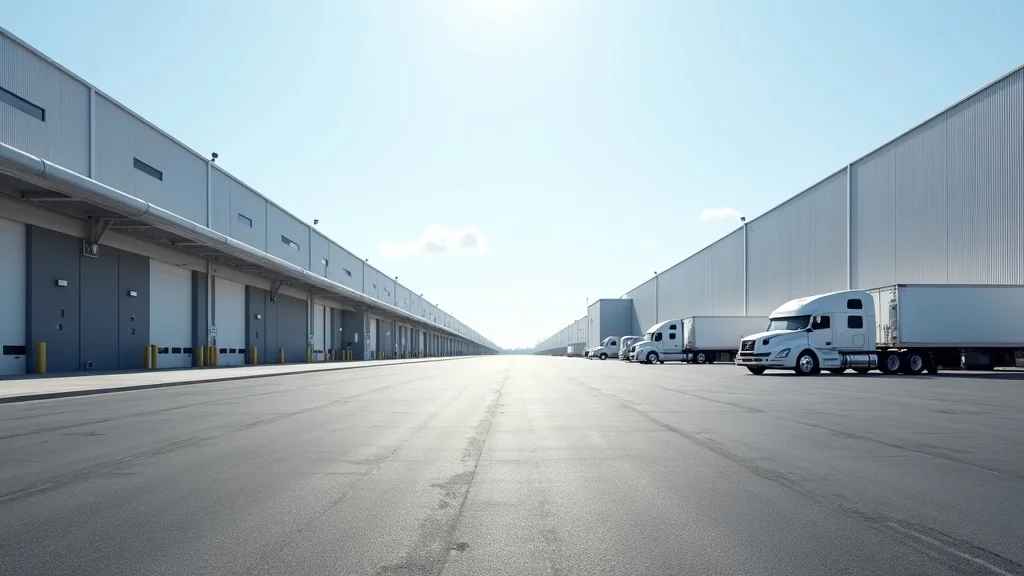
Why Asphalt for Industrial and Commercial Facilities Demands a Heavy-Duty Approach
Asphalt for industrial and commercial facilities must meet far higher standards than typical commercial paving. What sets these environments apart is the sheer and constant pressure from heavy-duty trucks, forklifts, and other industrial vehicles. Where standard commercial pavement might handle cars and light delivery traffic, industrial yards feel the weight of loaded trailers, heavy machinery, and high-frequency operations—often 24 hours a day, seven days a week.
The consequences of using under-engineered asphalt products or failing to design the right mix asphalt for such settings are severe. The frequent movement means each weak point becomes a potential failure. Surface layer rutting, depressions in drive lanes, and even sudden pavement collapse can halt operations and cost thousands in unexpected downtime. For this reason, hot mix asphalt and warm mix asphalt, paired with thick, carefully engineered bases and intermediate layers, have become the go-to choices for high-stress facilities. Their resilience, structural stability, and adaptability to environmental extremes—like high temperature and cold weather—make them ideal for industrial yards that simply can’t afford failure.
- Constant truck and forklift traffic
- Higher stress loads versus standard commercial paving
- Risks of surface failure and costly repairs
- Need for robust asphalt pavement thickness and base preparation
- Engineered mix asphalt for durable results
Common Pain Points in Industrial and Commercial Asphalt Paving
Durability Issues from Heavy Load Traffic
When it comes to industrial yard and high-traffic commercial paving, few challenges are as persistent as wear and tear from heavy loads. Over time, heavy trucks and loaded forklifts running over the same routes—especially at drive lanes, warehouse entrances, and dumpster pads—can lead the asphalt surface layer to rut, deform, or even collapse. Without the correct thickness and robust sub-base, industrial asphalt pavement will rapidly deteriorate, requiring expensive and disruptive repairs. The solution? Full-depth hot mix asphalt, designed with a stronger aggregate structure and expert compaction, ensures that every inch of pavement can withstand repeated pressure without showing premature signs of failure.
For facilities located in regions with unique climate challenges, such as Orlando, Florida, it’s important to consider how local weather and environmental factors can influence your asphalt’s performance and maintenance needs. Learn more about regional considerations for industrial paving by visiting asphalt solutions tailored for Orlando, Florida.
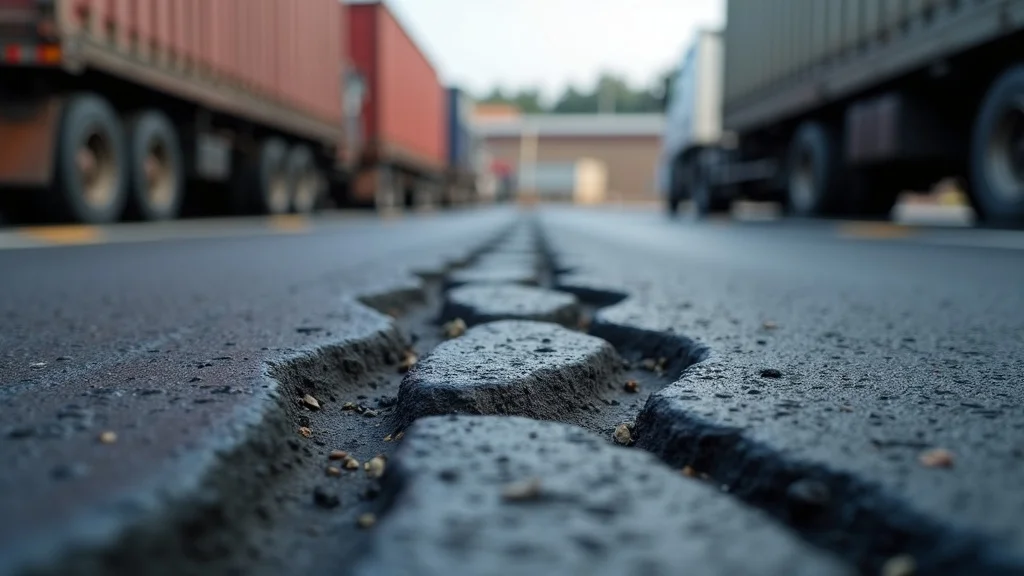
Drainage Concerns and Solutions
Drainage is a make-or-break factor in industrial and commercial paving success. Even the best hot mix asphalt cannot compensate for water that sits in loading docks, parking lots, or staging areas. Over time, pooling water finds its way through weak points in the surface and base, weakening the substructure and speeding up the process of surface failure, alligator cracking, and potholes. That’s why grading to ensure water flows away from critical zones—and installing advanced drainage systems—should be central to the design of any industrial yard or commercial parking lot paving project. Addressing drainage at the outset prolongs pavement life and protects your operation from unexpected rebuilds.
Cracking Under Repeated Weight
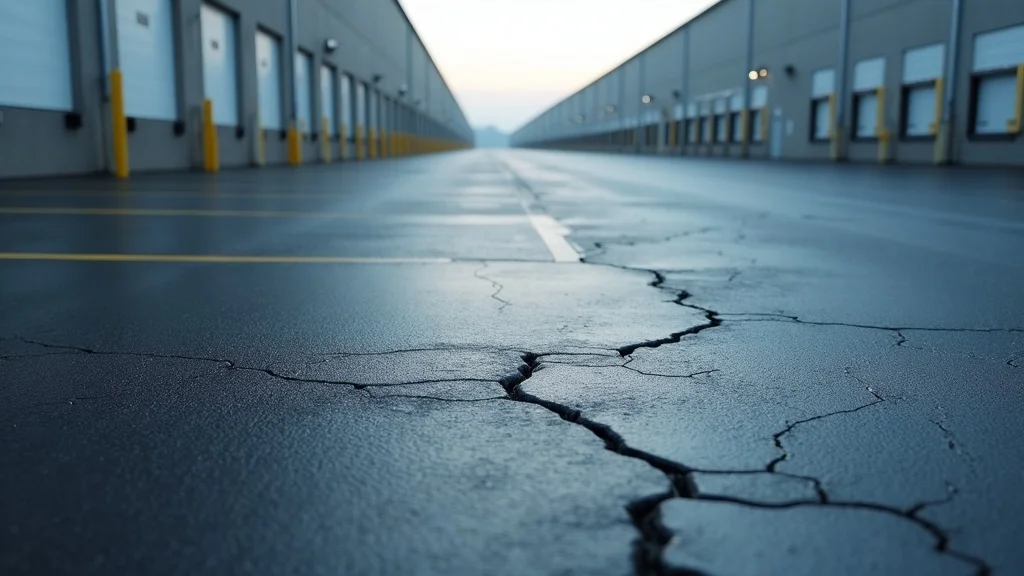
In high-stress industrial environments, alligator cracking and longitudinal splits are all too common, especially where heavy vehicles cross joints or turn sharply. Asphalt pavement subjected to expansion, contraction, and repeated flexes (such as in parking lots and drive lanes) will inevitably crack unless reinforced and regularly maintained. Quick and targeted intervention with crack sealing keeps minor issues from escalating into safety hazards and major repairs—key to smart, preventative commercial paving.
Operational Downtime and its Impact
Every hour your facility’s access routes or loading docks are out of action, critical deadlines slip. Industrial and commercial operations can’t afford lengthy paving or repair cycles—missed deliveries, delayed shipments, and reduced employee productivity quickly translate into lost business. Efficient commercial paving projects are planned with speed and strategy in mind: phased installations, rapid-curing asphalt mixes, and experienced paving contractors who know how to work within your timeline all ensure you stay operational, even as your new pavement takes shape.
| Pain Point | Asphalt Solution |
|---|---|
| Rutting and Depressions in Drive Lanes | Increase asphalt thickness; use reinforced hot mix asphalt with robust sub-base |
| Pooling Water around Dock Areas | Precise grading and install targeted drainage systems |
| Cracking from Heavy Loads | High-performance mix; ensure early crack sealing and preventative maintenance |
| Unplanned Facility Downtime | Phase work; coordinate off-peak paving with experienced industrial contractors |
Facility-Specific Asphalt Paving Considerations
Warehouses: Optimizing for Frequent Truck Traffic
Warehouse facilities are built around speed and efficiency, with trucks and forklifts weaving in and out from early morning to late night. The drive lanes and loading zones in these properties experience the highest frequency and concentration of heavy traffic, meaning the asphalt mix cannot just be standard—it must be custom-engineered to absorb shock, resist rutting, and offer a durable, stable driving surface. By focusing on thicker asphalt layers and reinforced compaction at loading docks and high-turnover areas, commercial paving professionals help warehouses minimize operational hiccups and extend pavement longevity.
Manufacturing Plants: Safety and Structural Integrity
Hot mix asphalt plays a vital role in manufacturing environments, where not only are vehicles moving constantly, but heavy equipment and machinery also add static loads to the pavement. Safety is the overriding goal, which means attention to every detail—from the non-slip texture of the surface layer to the internal strength of construction materials like fine aggregate and robust binders. Long-lasting, well-maintained asphalt pavement supports both worker safety and uninterrupted manufacturing cycles, ensuring your investment serves not just vehicles, but also the people who rely on safe footing and reliable surfaces every day.
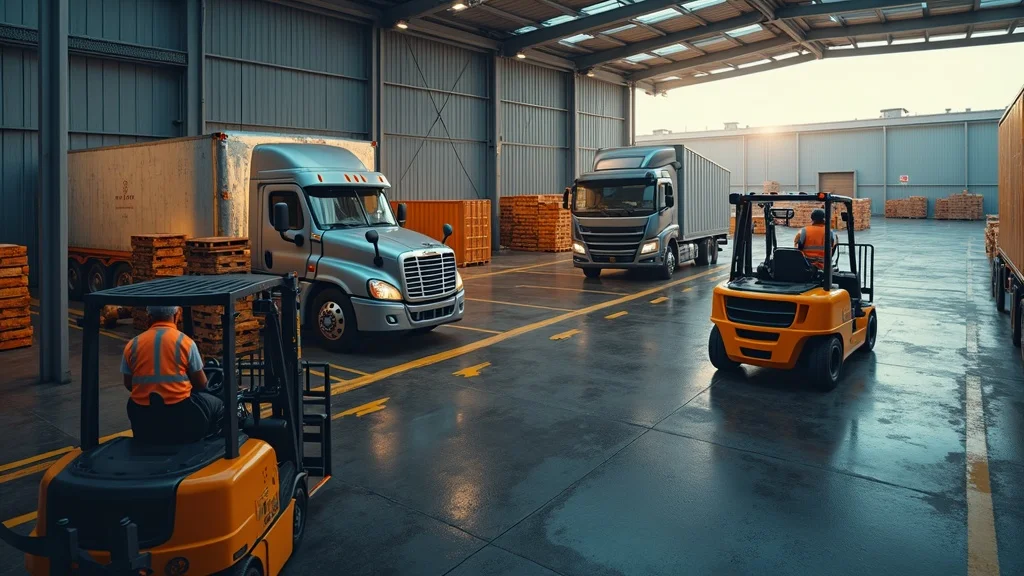
Distribution Centers: Efficiency Under Pressure
Operations at distribution centers depend on time—every lost minute cuts into profit and reputation. With hundreds of trucks, vans, and delivery vehicles entering and exiting daily, the asphalt pavement supporting these fleets must be durable, low-maintenance, and resilient to both heavy point loads and constant turning. Warm mix asphalt and high-performance hot mix solutions ensure that distribution centers can keep operations moving with minimal surface repairs and rare unscheduled maintenance.
Truck Yards: Addressing Extreme Weights and Turning Pressure
Truck yards are subject to the most severe stress of any commercial parking lot or industrial yard. Trucks idling for hours, sharp turning, and frequent braking create relentless pressure, making reinforced asphalt and thicker base layers essential. Asphalt products here are chosen for their extreme compressive strength and ability to resist deformation, potholing, and surface splitting—no feature can be overlooked in a location where one failure could disrupt dozens of scheduled logistics moves.
Asphalt Solutions for Industrial and Commercial Performance
Meeting the demands of industrial and commercial paving calls for more than standard practices—it requires specialized techniques and products designed for the rigors of continuous, heavy use. Full-depth asphalt construction with base and intermediate layers tailored to your site’s traffic load is foundational for strength and longevity. Choice of asphalt mix—hot mix asphalt or warm mix asphalt—depends on specific operational temperatures, traffic patterns, and climate considerations. Preventative crack sealing programs and scheduled maintenance can further fortify your investment, limiting damage before it spreads and protecting vital drive lanes, parking lots, and service routes.
- Full-depth asphalt paving for maximum strength in industrial yards
- Custom asphalt thickness and base preparation tailored to each facility’s needs
- Selection of hot mix or warm mix asphalt for specific traffic and climate conditions
- Incorporation of preventative crack sealing and proactive maintenance
“Choosing the right asphalt mix and construction technique is the foundation for long-lasting performance in high-traffic industrial facilities.”
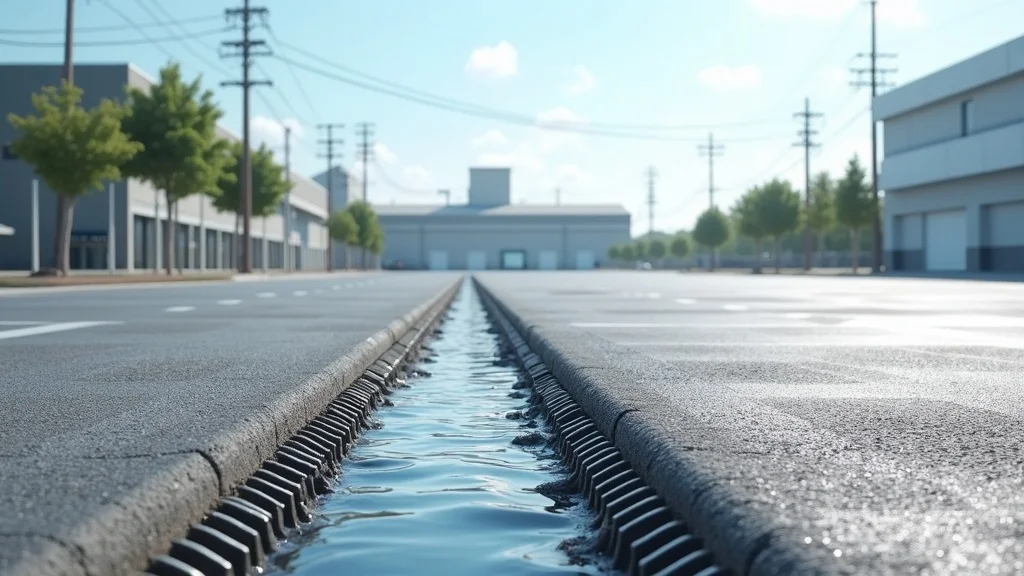
Preventing Drainage and Surface Failure in Industrial and Commercial Asphalt
Proper drainage is essential for the longevity of asphalt in industrial and commercial facilities. Without it, rain and runoff can quickly undermine even the best hot mix or warm mix asphalt, leading to premature failure. Effective grading diverts water away from vulnerable drive lanes, loading areas, and parking lots. Robust drainage systems—like catch basins, grates, and permeable border channels—must be installed wherever water regularly collects. Targeting low spots before they become sinkholes, and reinforcing weak sub-bases, ensures the facility remains operational and reduces the risk of expensive emergency repairs.
- Grading surfaces to direct water away from critical areas
- Installing effective drainage systems in parking lots and industrial yards
- Quickly repairing low spots and correcting sub-base weaknesses
- Prevention of water intrusion to avoid asphalt pavement failure
| Drainage Problem | Solution |
|---|---|
| Standing Water on Parking Lots | Laser-guided grading and installation of trench drains or sloped surfaces |
| Base Erosion from Water Intrusion | Rebuilding sub-base; upgrade drainage with perimeter curb inlets |
| Surface Cracks from Freeze-Thaw | Seal cracks and improve runoff management |
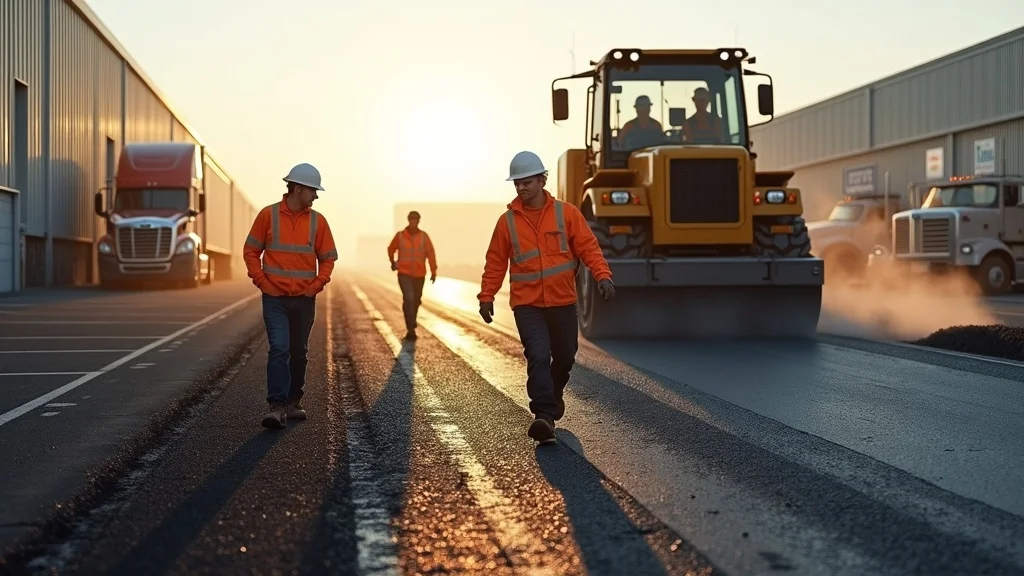
How to Plan Asphalt Projects Without Interrupting Facility Operations
Industrial and commercial paving doesn’t have to mean costly shutdowns. With the right planning, facility managers can keep shipments moving and production lines humming. Begin with a comprehensive site evaluation, including traffic flow and delivery schedules. An experienced commercial paving contractor can develop a phased approach, working on key areas one section at a time, often using off-peak hours or overnight work to minimize disruption. Clear, ongoing communication ensures the paving crew understands your operational constraints—whether that’s avoiding peak shipping windows or maintaining access to high-priority loading areas. This proactive approach ensures maximum upgrade with minimal impact.
- Comprehensive site evaluation and traffic flow analysis
- Phased approach to keep key operations running
- Night or off-peak paving schedules
- Clear, ongoing communication with facility managers throughout project
- Select commercial paving contractors with proven industrial experience
Maximizing the Life of Asphalt for Industrial and Commercial Use
Getting the most value from your investment in industrial and commercial asphalt starts with preventative measures and careful stewardship. Regular inspections help identify small issues—such as minor rutting, crack development, or early drainage failures—before they become major structural risks. A scheduled maintenance program featuring crack sealing, targeted patching, and periodic resurfacing extends the productive life of your asphalt pavement and reduces unexpected downtime or expense. Strategic planning for upgrades and resurfacing, particularly at the end of each pavement life cycle, ensures your facility never operates below its peak.
- Regular pavement inspections for early issue detection
- Implementation of preventative maintenance programs
- Timely crack sealing and targeted repairs
- Strategic long-term planning for resurfacing or upgrades
“Proactive maintenance is the most cost-effective way to extend the lifespan of industrial asphalt and protect your operational investment.”
People Also Ask About Asphalt for Industrial and Commercial Facilities
What is commercial grade asphalt?
Commercial grade asphalt refers to mixes designed for high-traffic, demanding environments typical of commercial and industrial properties. These mixes are engineered for durability and longevity under heavy loads and frequent use.
What are the three types of asphalt?
The three primary types of asphalt used in industrial and commercial paving are hot mix asphalt, warm mix asphalt, and cold mix asphalt. Hot mix and warm mix are most suitable for high-performance, heavy-duty applications.
How much does 1 ton of asphalt cost?
Asphalt prices vary based on region, materials, and project requirements. For an accurate estimate, it is best to consult with a local commercial paving contractor experienced in industrial yard and parking lot projects.
What is type 7 asphalt?
Type 7 asphalt generally refers to a specific mix classification designed for particular applications, such as high-traffic commercial parking lots. Its properties make it suitable for heavy loads and commercial-grade durability.
FAQs About Asphalt for Industrial and Commercial Facilities
- How thick should asphalt be for heavy truck traffic?
- What causes asphalt to fail under heavy loads?
- Can paving be done without shutting down operations?
- How do you fix drainage problems in industrial lots?
- How long does industrial asphalt typically last?
Refer to previous sections for detailed answers on industrial and commercial asphalt solutions.
Key Takeaways for Industrial and Commercial Asphalt Paving
- Industrial and commercial paving requires specialized design and materials.
- Routine inspection and preventative maintenance are essential for longevity.
- Work with experienced contractors to minimize disruption to facility operations.
- Proper drainage and engineered solutions prevent premature asphalt failure.
Partner with Experts for Your Industrial and Commercial Asphalt Needs
Industrial-grade asphalt paving ensures the longevity, durability, and safety of your facility. Protect your operations and maximize your investment by choosing the right team. Call 610 366 9406 to schedule a commercial paving evaluation today.
If you’re looking to further enhance the resilience of your facility’s pavement, understanding how environmental factors and maintenance products interact with your asphalt is crucial. For example, the use of de-icers can have a significant impact on surface integrity and long-term durability, especially in high-traffic industrial settings. To gain deeper insight into safe maintenance practices and advanced protection strategies, explore the guide on the safety and effects of de-icer for asphalt. This resource will help you make informed decisions that keep your commercial pavement performing at its best, season after season.